
Modern businesses rarely suffer from a lack of information.
There are messages, spreadsheets, emails, calls, notes, customer records, tasks and documents everywhere.
The problem is not that information doesn't exist.
The problem is that information doesn't always stay connected to the context around it.
Information keeps multiplying.
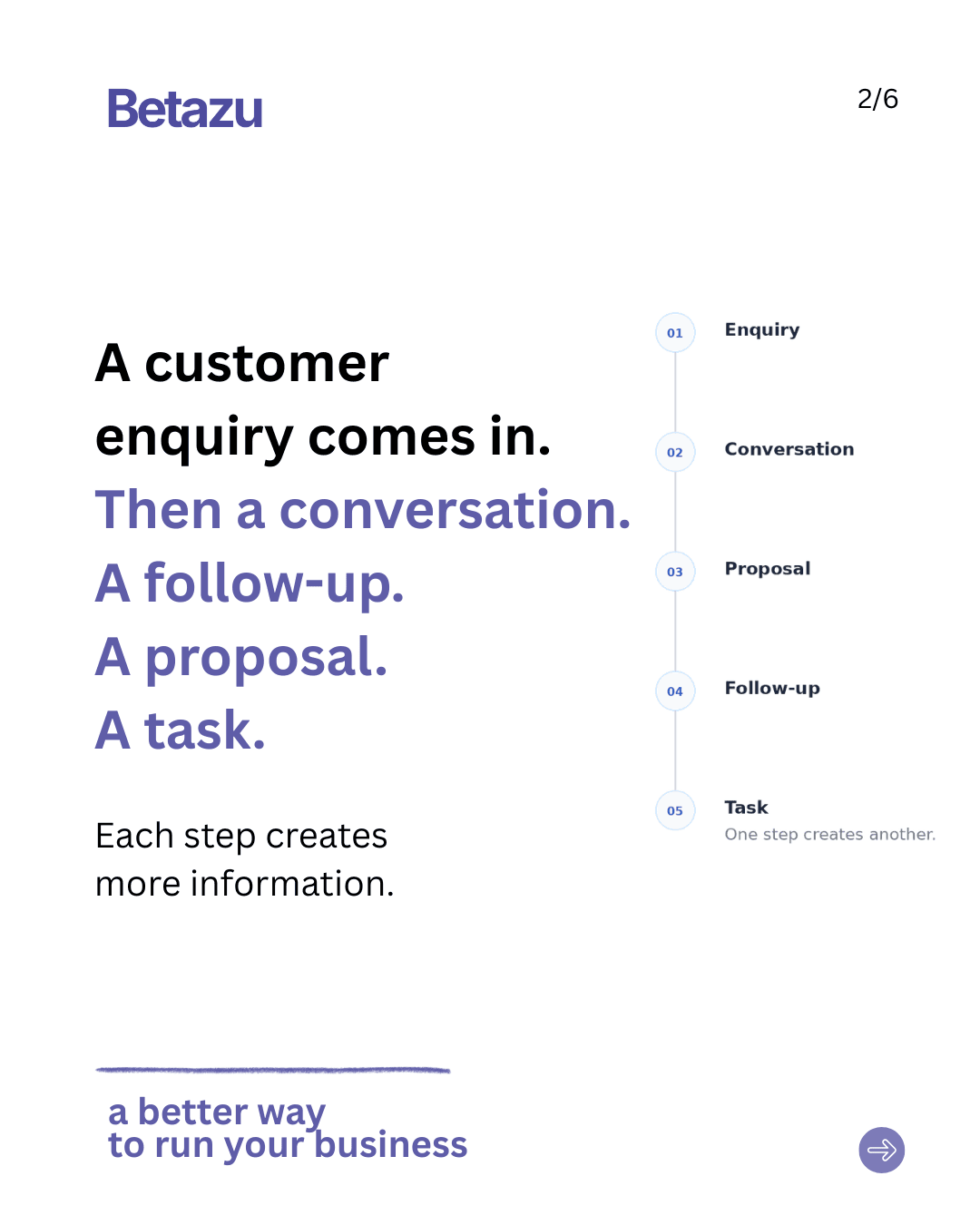
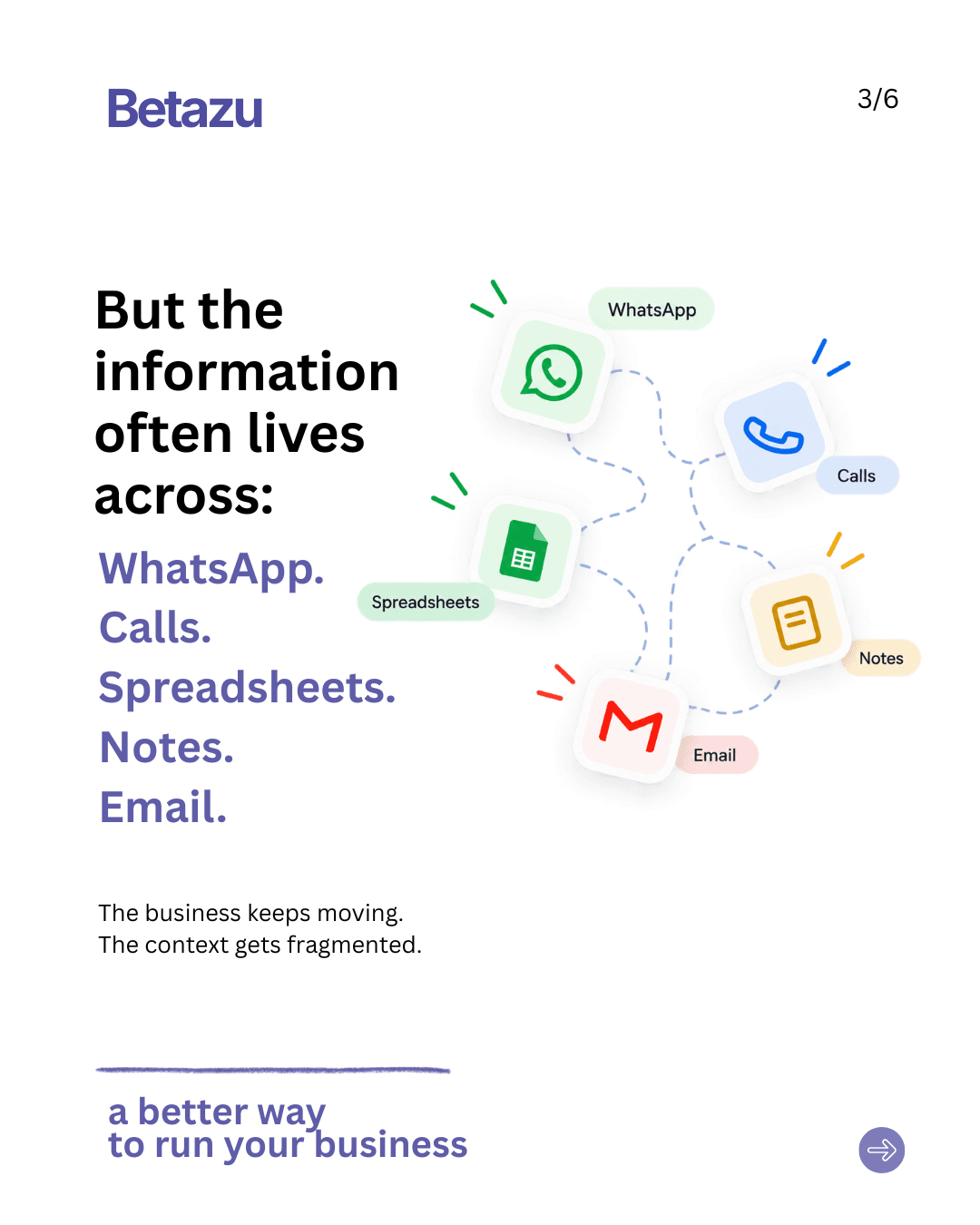
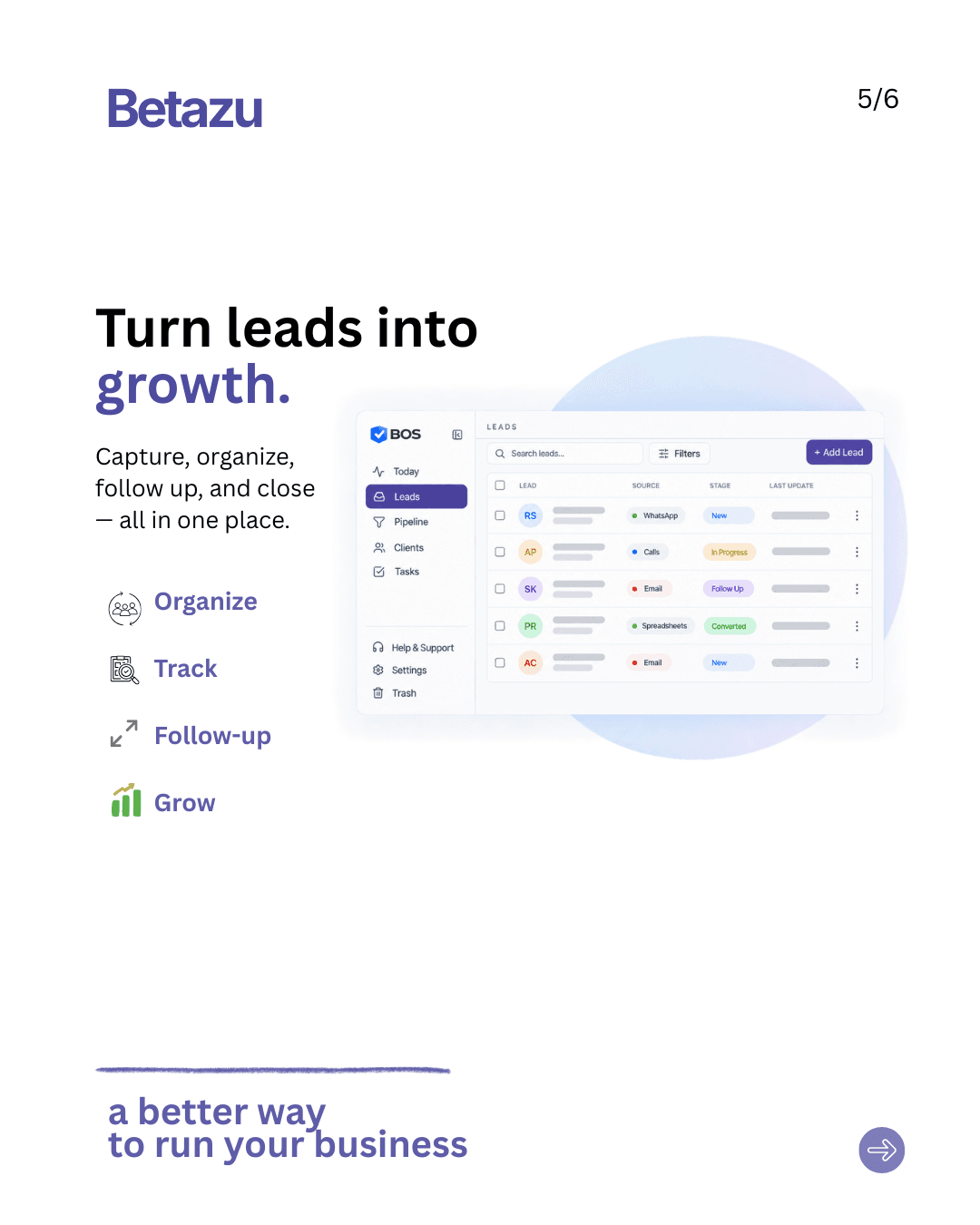
A customer enquiry arrives on WhatsApp.
Someone discusses it over a phone call.
Details are added to a spreadsheet.
A follow-up is written in a notebook.
An email is sent later.
Every step creates more information.
But the information becomes fragmented.
The business is still moving.
But the story of what is happening becomes distributed across different places.
One person knows about the conversation.
Another knows about the proposal.
Someone else owns the follow-up.
The information exists. The context doesn't always travel with it.
Context is what makes information useful.
Knowing that a customer contacted your business is information.
Knowing what they asked for, what was discussed, what was promised, who owns the relationship and what should happen next is context.
Context turns information into something a team can act on.
The next step matters.
Businesses don't operate by collecting information.
They operate by turning information into action.
Information
What happened?
Context
Why does it matter?
Decision
What should happen next?
Action
Who needs to do it?
Outcome
What happened after that?
The operational gap in practice.
Information can exist in many places while the operational story remains fragmented.
A conversation might happen in one system.
A customer record might live somewhere else.
A task might be written down separately.
A decision might exist only in someone's memory.
The result is not necessarily a lack of information.
It is a lack of connected context.
This is the operational gap.
The gap between having information and being able to use that information effectively is an operational problem.
It appears when teams spend time searching for updates, asking for context, checking spreadsheets, remembering conversations or figuring out what needs to happen next.
Better operations aren't necessarily about collecting more information.
They're about connecting the information a business already has to the decisions and actions that follow.
From information to action.
A useful operating system doesn't simply store what happened.
It helps preserve the relationship between what happened, why it matters and what should happen next.
That creates a simple chain:
Information → Context → Decision → Action → Outcome
The value is not only in storing each individual piece.
The value comes from keeping the chain connected.
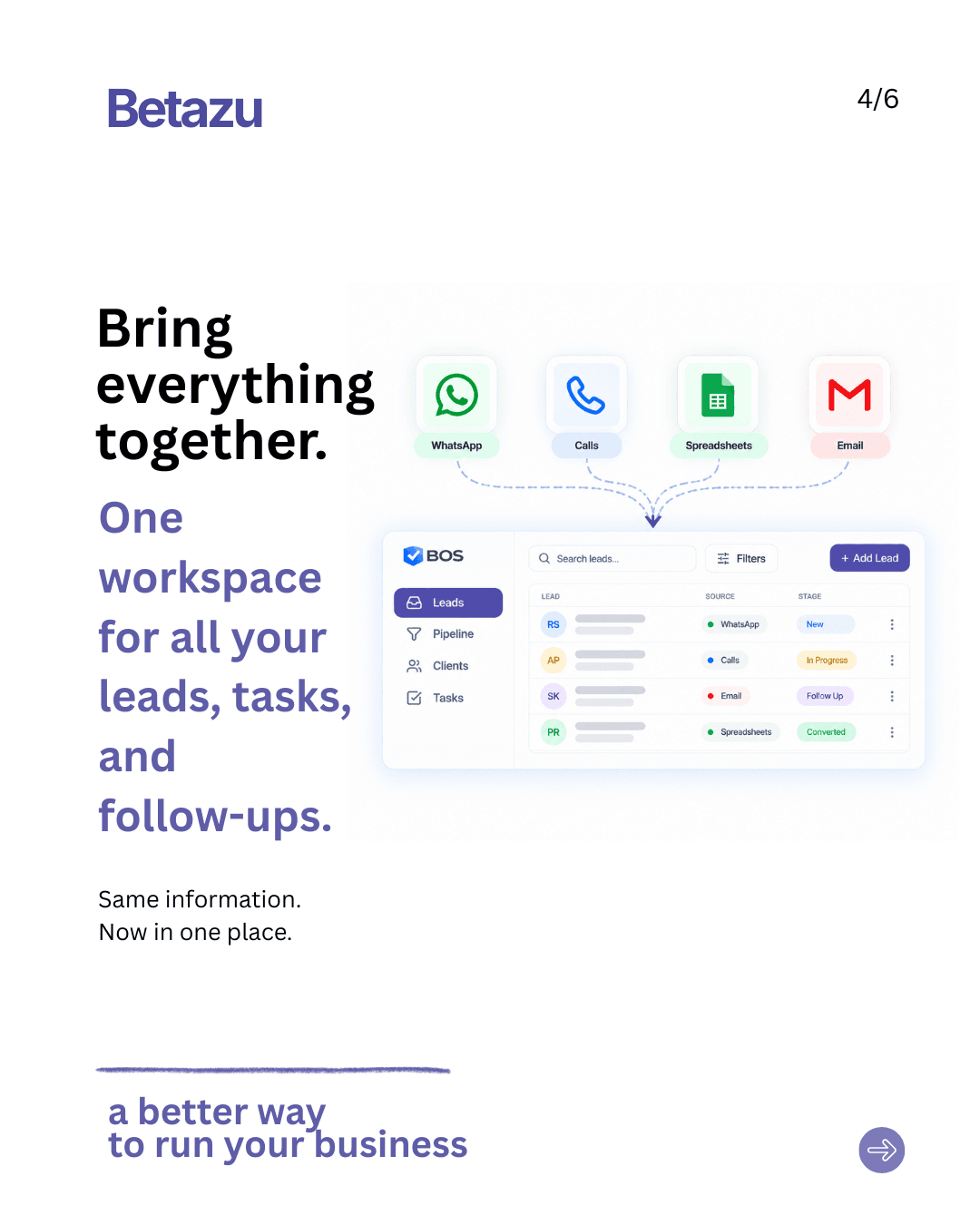
A better way to run a business starts with connected context.
That's the idea behind a Business Operating System: bringing information, workflows, decisions and actions into one operating environment.
For modern businesses, the challenge isn't simply having more information.
It's making sure the right information reaches the right context, decision and action at the right time.
Betazu BOS
Turn business information into action.
Bring leads, customers, tasks, workflows and operational context together in one Business Operating System.
Explore BOS