
Busy Teams, Scattered Work: How to Organize Business Operations
A team can be busy all day and still struggle to keep work organized.
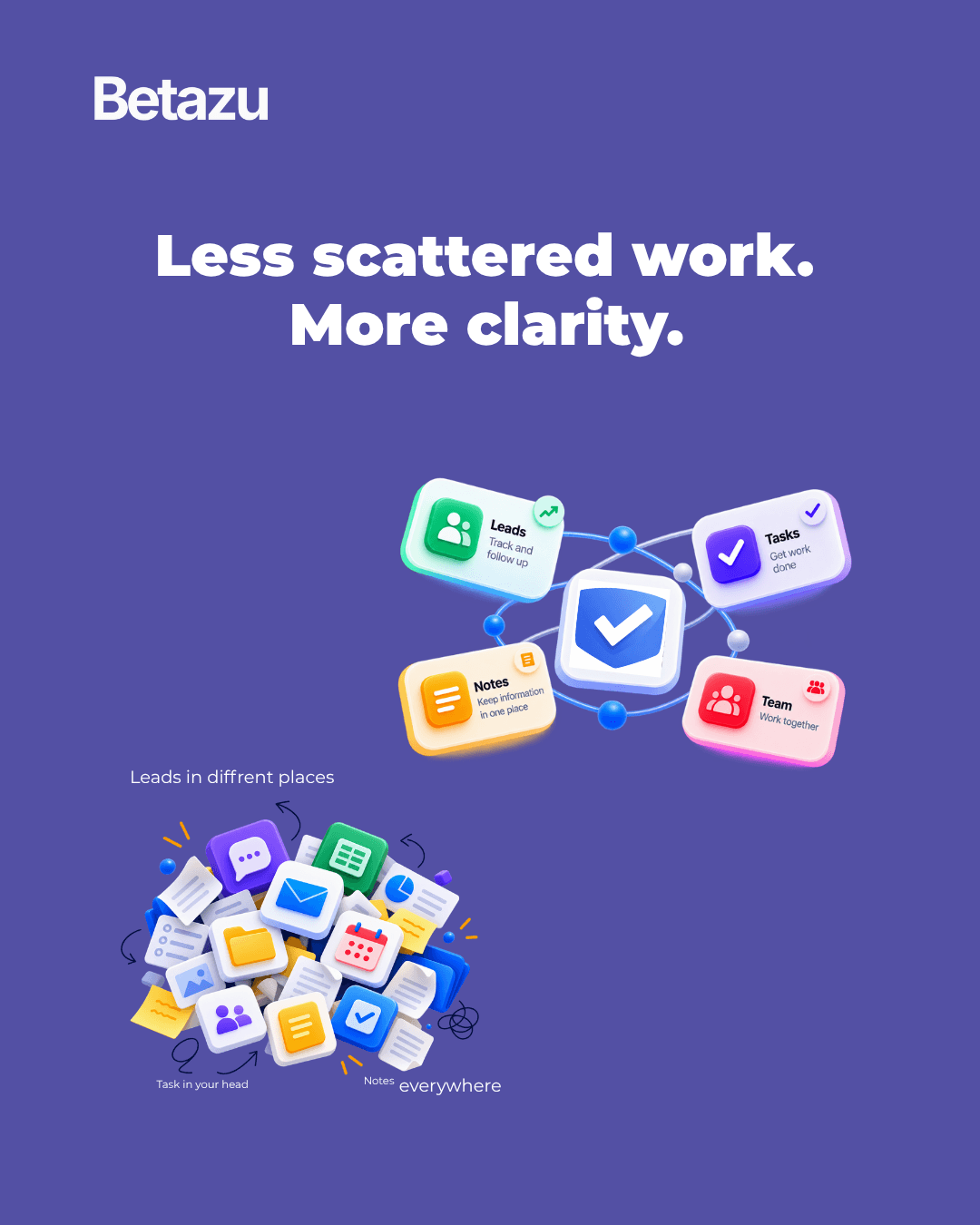
Customer leads may be recorded in one place, tasks discussed somewhere else, and important notes saved in separate documents or conversations. Everyone may be working hard, but it can become difficult to see what needs attention and who is responsible for the next step.
The challenge is not always a lack of effort. Often, it is the way everyday work is organized.
For small businesses and growing teams, a clear process for managing leads, tasks, notes, and responsibilities can make day-to-day coordination easier.


1. Your team is busy—but is the work organized?
Being busy does not automatically mean work is moving forward smoothly.
Team members can spend time answering messages, checking updates, searching for customer details, and asking colleagues about the status of tasks. These activities may be necessary, but repeated searching and clarification can make coordination harder.
A useful starting point is to ask:
- Can the team find the latest information without asking several people?
- Is it clear who owns each important task?
- Are customer follow-ups recorded somewhere reliable?
- Can team members see what still needs attention?
If the answers are often unclear, the team may need a more consistent way to organize its work.
2. Leads here, tasks there, notes somewhere else
Business work often spans multiple activities.
A potential customer makes an enquiry. Someone records the lead. A colleague needs to follow up. A manager shares a note about the conversation. Later, someone needs to check whether the next step happened.
When these details are separated, people may have to reconstruct the story before they can act.
This can lead to duplicated effort, delayed follow-ups, missed tasks, and unnecessary status-checking. These outcomes are not inevitable, but they become more likely when responsibilities and information are difficult to track.
3. Keep the important parts of work connected
A more organized workflow makes it easier to understand the relationship between information and action.
For example:
- Record a new lead.
- Capture the relevant context in a note.
- Create a task for the next step.
- Make responsibility clear to the team.
- Review the task until it is completed.
The exact process will vary by business. What matters is that useful information does not end up disconnected from the work it supports.
4. One workspace for leads, tasks, notes, and team
A shared workspace can give a team a consistent place to organize core operational activities.
Leads
Keep customer enquiries organized so the team can review them and manage follow-ups.
Tasks
Record work that needs to be done and make outstanding responsibilities easier to track.
Notes
Preserve important details and updates that help the team understand the work.
Team
Give team members a shared workspace for coordinating relevant work and information.
These capabilities do not remove the need for good processes or communication. They provide a structure the team can use to support them.
5. Less scattered work. More clarity.
The goal is not to add more tools for the sake of it. The goal is to make everyday work easier to understand and manage.
A practical system should help the team answer three basic questions:
- What needs attention?
- Who is responsible?
- What is the next step?
Start with a simple workflow, agree on how the team will use it, and keep important updates in the appropriate place. Consistency is more valuable than creating a complicated process nobody follows.
6. How Betazu BOS fits in
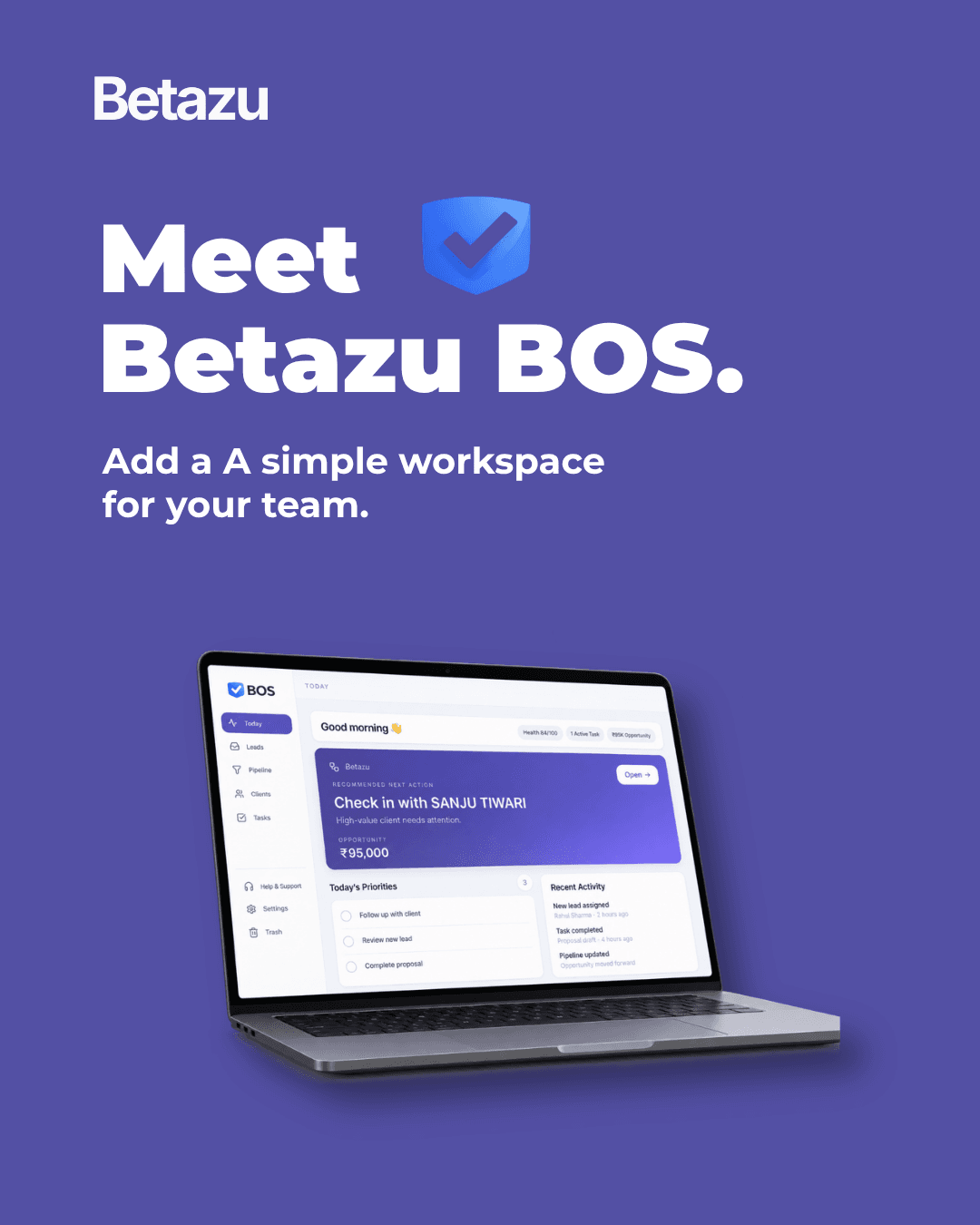
Betazu BOS is a workspace designed to help organize leads, tasks, notes, and team collaboration.
It gives small teams a starting point for keeping these core activities together instead of relying entirely on memory or disconnected records.
Explore Betazu BOS to see whether it fits the way your team works.
Frequently asked questions
How can I organize business operations in a small team?
Start by identifying the work your team repeats most often. Create a consistent way to record leads, capture important notes, assign tasks, and review outstanding work. Keep the process simple enough for everyone to follow.
Why do teams miss tasks and follow-ups?
Tasks and follow-ups can be missed when responsibilities are unclear, updates are scattered, or people rely on memory rather than a consistent tracking process. Clear ownership and a shared record of next steps can help reduce these gaps.
What should a small business workspace include?
A practical starting point is lead management, task tracking, shared notes, and a way for team members to coordinate work. The right setup depends on the team's size, workflow, and operational needs.
What is Betazu BOS?
Betazu BOS is a business workspace designed around leads, tasks, notes, and team collaboration. Learn more at betazu.com/bos.
Is a shared workspace enough to improve productivity?
Not on its own. A shared workspace can make information and responsibilities easier to track, but teams also need clear processes, regular updates, and agreement about how work should be managed.
Get your work organized
When leads, tasks, notes, and responsibilities are easier to find, a team can spend less time chasing updates and more time moving work forward.
Start with a simple process. Keep ownership clear. Make the next step visible.
Explore Betazu BOS for one workspace to organize your leads, tasks, notes, and team work.
Betazu — Better Decisions. Better Systems.
Betazu BOS
Turn business information into action.
Bring leads, customers, tasks, workflows and operational context together in one Business Operating System.
Explore BOS